What is Chikankari Embroidery — it is one of India’s most delicate and royal hand-embroidery styles, born in the heart of Lucknow, Uttar Pradesh. Known for its subtle white threadwork and elegant motifs, Chikankari Embroidery blends art, culture, and craftsmanship into one beautiful fabric story.
In this guide, you’ll learn what is Chikankari Embroidery, its history, techniques, types of stitches, and why it continues to shine in modern fashion. Let’s explore this timeless art form that defines the soul of Lucknow.
History of Chikankari Embroidery
The Mughal Beginnings
To understand what is Chikankari Embroidery, we must go back to the Mughal era. Legend says Empress Nur Jahan, wife of Emperor Jahangir, introduced this elegant art to India in the 17th century. Inspired by Persian embroidery traditions, she taught local artisans the art of creating intricate white threadwork on muslin.
Under the Nawabs of Awadh, Lucknow became the epicenter of Chikankari Embroidery. What started as a royal pastime soon evolved into a cultural symbol of elegance and refinement.
External Link Suggestion: Read more about Chikankari on Wikipedia
The Evolution of Lucknowi Craft
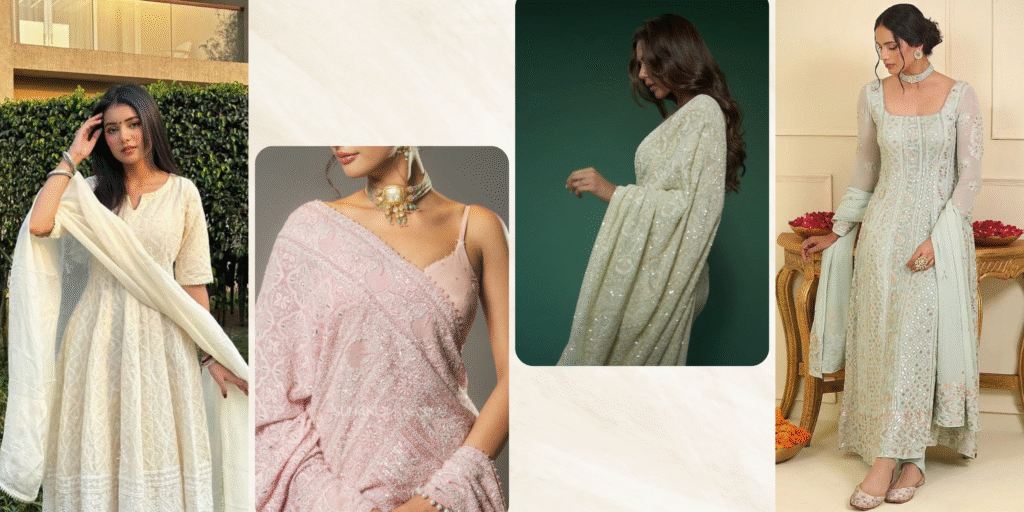
Originally, Chikankari Embroidery was done only with white threads on white muslin — a technique known as white-on-white shadow work. Over time, artisans began experimenting with pastel fabrics, colored threads, beads, and sequins, keeping the traditional charm alive while adapting to modern tastes.
Today, Chikankari is globally recognized and even holds the Geographical Indication (GI) tag for “Lucknow Chikan Work,” preserving its authenticity and heritage.
The Making Process of Chikankari Embroidery
If you truly want to understand what is Chikankari Embroidery, you must appreciate the patient artistry behind every piece. Each garment passes through multiple skilled hands before completion.
Step 1 – Design and Block Printing
The process begins with designing motifs like flowers, paisleys, and vines. Wooden blocks are then dipped in washable blue ink and carefully stamped onto the fabric — a stage called “Chhappai.”
Step 2 – Hand Embroidery
Next comes the heart of Chikankari Embroidery — the stitching. Skilled artisans, mostly women, use fine needles and threads to bring the printed designs to life. Every region and artisan adds a unique touch, making each piece one of a kind.
Step 3 – Washing and Finishing
After the embroidery is complete, the fabric is washed to remove ink traces and ironed for a crisp finish. This final stage, known as “Dhulai”, reveals the true elegance of the Chikankari art.
Internal Link Suggestion: Explore Chikankari making process on Naqsh-e-Lucknow
Types of Stitches Used in Chikankari Embroidery
A major part of learning what is Chikankari Embroidery lies in knowing its 30+ traditional stitches. Each stitch brings texture, depth, and delicacy.
| Stitch Name | Description |
| Bakhiya (Shadow Work) | Done from the back side of fabric, creating a soft shadow effect on the front. |
| Phanda | Small, knot-like dots forming flower centers. |
| Murri | A grain-shaped stitch that adds dimension to floral designs. |
| Tepchi | A running stitch used for outlining patterns. |
| Jali Work | Thread is pulled apart to create a net or lace-like appearance. |
These stitches together define the intricate identity of Chikankari Embroidery, making it a symbol of slow, sustainable fashion.
External Link Suggestion: Learn more about Chikankari stitches on MAP Academy
Fabrics and Materials Used
Traditionally, Chikankari Embroidery was done on muslin or mulmul — lightweight fabrics suitable for delicate handwork. Today, artisans use a wide variety:
- Cotton – Perfect for daily wear Chikankari kurtas.
- Silk & Organza – For festive and bridal Chikankari outfits.
- Georgette & Chiffon – For flowy, modern silhouettes.
Threads are generally cotton or silk, while embellishments like sequins, mukaish, and beads are added to elevate contemporary designs.
Why Chikankari Embroidery is Special
A Blend of Art and Heritage
What is Chikankari Embroidery if not a living testimony to India’s royal craftsmanship? Every stitch represents centuries of tradition passed down through generations of Lucknowi artisans.
Subtle Beauty in Simplicity
Unlike heavy zari or mirror work, Chikankari focuses on subtle elegance. The white-on-white look gives it a soft, graceful charm — ideal for both everyday wear and special occasions.
Empowering Artisans
Thousands of women in and around Lucknow depend on Chikankari Embroidery for livelihood. By purchasing authentic hand-embroidered pieces, you directly support local craftsmanship and sustain cultural heritage.
Internal Link Suggestion: Meet the artisans behind Naqsh-e-Lucknow
How to Identify Authentic Chikankari Embroidery
Knowing what is Chikankari Embroidery also means being able to tell real from fake. With machine-made copies flooding the market, here’s how to identify the authentic art:
- Check the back of the fabric: Real Chikankari shows slightly uneven threads — proof it’s hand-made.
- Look for softness: Authentic embroidery feels smooth, not stiff like machine work.
- GI Tag: Genuine Lucknow Chikan Work carries a registered Geographical Indication mark.
- Artisan details: Many ethical brands and cooperatives share artisan information to ensure transparency.
The Modern Relevance of Chikankari Embroidery
In today’s world, where fast fashion dominates, Chikankari Embroidery offers a slow, sustainable alternative. Designers like Abu Jani–Sandeep Khosla, Manish Malhotra, and Sabyasachi have revived it on global runways.
From pastel kurtis to modern Indo-Western outfits, this heritage craft is now an international fashion statement. Its timeless appeal makes it a favorite among eco-conscious buyers and heritage lovers alike.
External Link Suggestion: Explore Chikankari collections at House of Chikankari
Conclusion
o sum up, what is Chikankari Embroidery? It’s not just needlework; it’s poetry on fabric. Each stitch carries centuries of artistry, patience, and love from the hands of Lucknow’s skilled artisans. From royal courts to modern fashion ramps, Chikankari continues to narrate India’s story of elegance and heritage.
When you wear or promote Chikankari, you’re not just embracing a style — you’re preserving a tradition that defines cultural craftsmanship at its finest.
Internal Link Suggestion: Explore the 3 Best Places to Buy Chikankari Kurti in Lucknow to discover where authentic artistry truly comes alive.