
When Was Chikankari Invented? A Deep Dive Into the 400-Year-Old Art of Lucknow Chikankari
Chikankari is one of India’s most famous and delicate embroidery styles, loved globally for its elegance, minimalism, and royal charm. If you’ve ever admired a beautifully hand-embroidered Chikankari kurti or saree, you may have wondered: When was Chikankari invented?
The answer goes back over 400 years, into the heart of the Mughal empire, where art, culture, and textile craft flourished.
In this article, we’ll explore the origin of Chikankari, its history, how it evolved in Lucknow, and why this craft still stands strong as a symbol of India’s heritage.
We will also include:
- Keyword-rich headings
- Internal & external link suggestions
- FAQs
- Conclusion
Table of Contents
The Origin of Chikankari – When Was Chikankari Invented?
The widely accepted historical belief is that Chikankari was invented in the late 16th to early 17th century, during the reign of the Mughal Emperor Jahangir.
Nur Jahan — The Woman Behind Chikankari’s Invention
Most historical records and folklore point toward Empress Nur Jahan, the wife of Emperor Jahangir, as the creative mastermind behind Chikankari.
Why Nur Jahan Is Linked to Chikankari:
- She was skilled in various arts, including embroidery.
- She introduced multiple Persian-inspired crafts in India.
- Her aesthetic taste aligned perfectly with white-on-white delicate embroidery, which is the signature of traditional Chikankari.
Many historians claim that Nur Jahan either invented the art or refined and popularized it in the Mughal court.
Timeline Summary
- Period: Between 1595–1620
- Region: Brought into North India, especially Awadh (present-day Lucknow)
- Influence: Strongly Persian, with motifs like flowers, paisleys, vines
This places the invention of Chikankari at over 400 years ago.
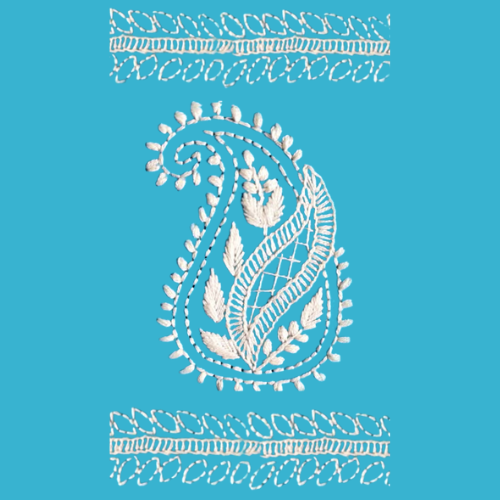
Is Chikankari Older Than the Mughal Period? Alternative Theories
While most people credit the Mughals, there are alternative theories that push the invention timeline further back.
Ancient Indian Mentions (Possibly 3rd Century BC)
Some scholars claim that a craft similar to Chikankari called “Chikan” is mentioned in:
- Megasthenes’ records (Greek ambassador to the Mauryan court)
- Kautilya’s Arthashastra
These sources mention “fine muslin garments with floral patterns,” but there is limited proof that this is the same as today’s Chikankari.
So while the craft style may have ancient roots, its current form was clearly shaped during the Mughal era.
Why Was Chikankari Invented? Understanding Its Purpose
The invention and development of Chikankari were deeply connected to climate, fabrics, and fashion of the Mughal era.
Key Reasons Chikankari Was Invented:
- Hot climate of North India: Delicate white embroidery on mulmul (fine cotton) was cooling and comfortable.
- Royal fashion: Mughal courts emphasized sophistication and light, airy clothing.
- Persian influence: White thread embroidery was widely practiced in Persia.
- Art patronage: Mughals invested heavily in textiles and artisan crafts.
Thus, Chikankari began as a royal craft, later becoming popular among the masses.
How Chikankari Came to Lucknow — The True Home of This Art
Although invented in the Mughal court, Chikankari found its permanent home in Lucknow, where it continues to flourish even after centuries.
Shift to Awadh Under Nawabs
After the decline of the Mughal empire, Nawabs of Awadh (especially Shuja-ud-Daula and Asaf-ud-Daula) became major patrons.
Why Lucknow Became the Chikankari Hub:
- The city was rich in cultural refinement (tehzeeb).
- Skilled artisans migrated here.
- Royal patronage encouraged experimentation.
- Nawabi architecture inspired many motifs.
By the 18th century, Lucknow Chikankari became a globally recognized art.
Evolution of Chikankari Embroidery Through the Centuries
17th Century — Mughal Era
- Birth of Chikankari
- Use of white-on-white (called tanzeb)
- Primarily on muslin and mulmul fabrics
18th–19th Century — Nawab Rule
- Introduction of floral Persian motifs
- Development of multiple stitches
- Artisans forming specialized clusters around Lucknow
20th Century — Revival Period
- Chikankari gained national recognition
- Designers began showcasing it on global platforms
21st Century — Modern Chikankari Industry
- Fusion fashion (Chikankari lehengas, gowns, denim)
- Machine embroidery emerged, but hand Chikankari remained superior
- Chikankari e-commerce boom
- Influencers and Bollywood revived its popularity
Keywords: when was chikankari invented, history of chikankari embroidery, chikankari origin, chikankari invented timeline, chikankari history Lucknow
What Makes Chikankari Unique?
Chikankari stands out because of its stitch variety, handwork, and sheer elegance.
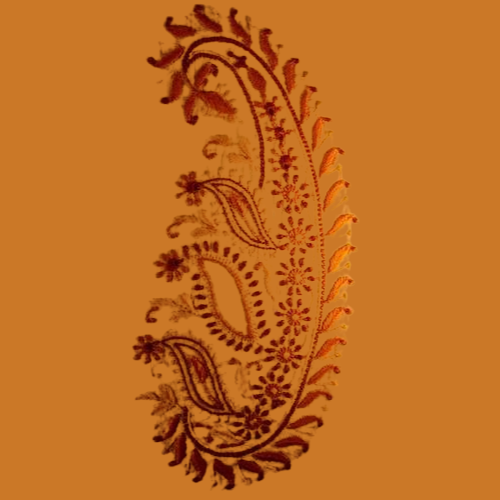
The 32 Famous Stitches of Chikankari
Some of the most famous stitches include:
- Phanda
- Keel Kangan
- Murri
- Bakhiya
- Pechni
- Jali Work
Each stitch tells a story that reflects centuries-old craftsmanship.
Conclusion — Chikankari Was Invented Over 400 Years Ago, But Its Charm Is Eternal
So, when was Chikankari invented?
Chikankari was invented around the 16th–17th century, during the Mughal era, with Nur Jahan credited as its founder or promoter. Over time, the craft travelled from the Mughal courts to the streets of Lucknow, where it evolved into the world-famous Lucknow Chikankari.
Today, more than 400 years later, Chikankari continues to thrive as a symbol of grace, culture, and royal artistry.
Click here to Read more about Chikankari history, origin & evolution