
The Rise and Revival of Chikankari: Past, Present & Future
Chikankari, a delicate and intricate hand embroidery from Lucknow, India, has long been celebrated as a symbol of craftsmanship, culture, and timeless elegance. This exquisite art form tells the story of a rich cultural heritage that has survived centuries of change, decline, and resurgence.
In this comprehensive article, we explore the rise and revival of Chikankari, tracing its past origins, understanding its present significance, and envisioning its future prospects. Whether you are a textile lover, fashion enthusiast, or cultural historian, this deep dive into Chikankari’s journey will offer you valuable insights.
Table of Contents
The Past — The Historical Rise of Chikankari Embroidery
Origins and Mughal Influence on Chikankari
Chikankari is believed to have originated over 400 years ago during the Mughal era, a period renowned for its patronage of the arts and textiles. Historical accounts widely credit Empress Nur Jahan, wife of Emperor Jahangir, as the catalyst who either invented or popularized this embroidery technique.
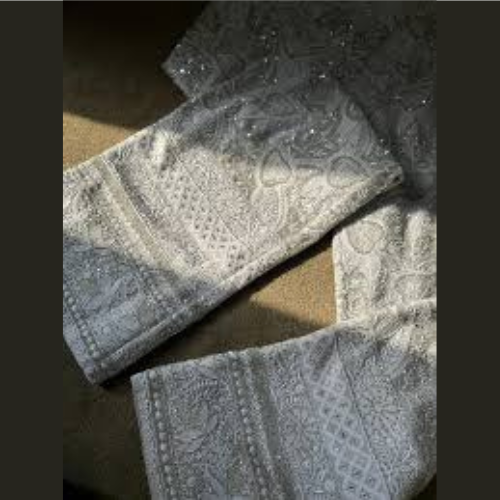
The art form is a beautiful amalgamation of Persian embroidery traditions merged with Indian motifs and sensibilities. This led to the distinctive white-on-white embroidery style, a signature characteristic of traditional Chikankari.
Key Features of Early Chikankari:
- Use of fine white cotton or muslin fabric.
- Hand-stitched white thread embroidery creating floral and paisley motifs.
- Delicate stitches like Phanda, Bakhiya, Murri, and Jali.
Flourishing in the Nawabi Courts of Lucknow
After the decline of Mughal power, the Nawabs of Awadh, particularly in Lucknow, became passionate patrons of Chikankari. This patronage gave rise to the golden era of Chikankari, where artisans innovated by expanding the range of stitches and patterns, incorporating elements inspired by Awadhi culture, gardens, and architecture.
Lucknow quickly emerged as the epicenter of Chikankari embroidery, establishing a rich artisan community that ensured the craft’s survival and growth.
The Present — The Revival of Chikankari in Contemporary Times
Decline and Challenges in the 20th Century
The advent of industrialization and mechanized textile production posed a severe threat to Chikankari by the 20th century. Machine-made embroidery and fabrics flooded the market, drastically reducing demand for painstakingly handcrafted Chikankari.
Economic hardships and dwindling patronage caused many artisan families to abandon the craft, leading to fears of Chikankari becoming a lost art.
Factors Catalyzing the Revival of Chikankari
Despite these challenges, Chikankari has witnessed a remarkable revival in recent decades, spurred by several key factors:
Slow Fashion and Sustainability Awareness
With increasing global awareness about sustainable and ethical fashion, consumers are shifting focus towards handcrafted, eco-friendly products. Chikankari perfectly fits this ethos, being a slow, artisanal craft.
Government and NGO Initiatives
Programs by the Ministry of Textiles, Government of India, and NGOs have empowered Chikankari artisans through training, financial aid, and access to new markets.
Celebrity Influence and Media Exposure
Bollywood celebrities and renowned designers frequently feature Chikankari in their collections, raising the craft’s profile nationally and internationally.
Digital Platforms and E-commerce
Online marketplaces like Etsy, Amazon India, and craft-specific portals have opened global sales avenues for artisans, bypassing traditional middlemen.
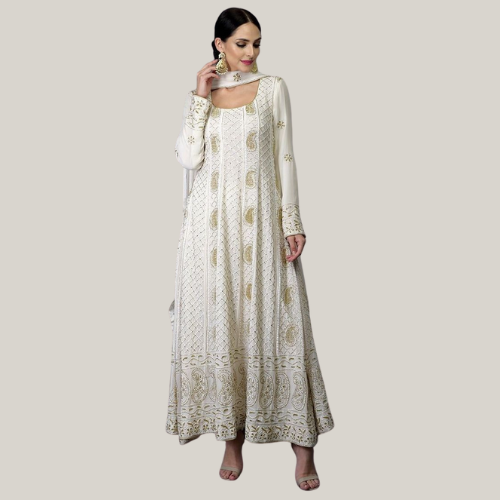
Innovations and Modern Adaptations
Contemporary designers and artisans have innovated to keep Chikankari relevant to today’s fashion sensibilities:
- Use of vibrant colored threads alongside traditional white embroidery.
- Application of Chikankari on varied fabrics such as chiffon, silk, organza, and even denim.
- Fusion styles that combine western silhouettes with Chikankari embroidery.
- Incorporation of machine embroidery in mass production, while preserving hand embroidery for high-end couture.
These adaptations have expanded the craft’s appeal and market, especially among younger consumers.
The Future — Prospects and Preservation of Chikankari
Balancing Tradition and Innovation
The sustainability of Chikankari hinges on maintaining its traditional techniques while embracing innovation. Key steps include:
- Training new artisans to inherit and master the craft.
- Utilizing technology for efficient design creation, quality control, and marketing.
- Encouraging collaborations between traditional artisans and contemporary designers.
Global Recognition and Cultural Protection
Efforts are underway to elevate Chikankari’s status internationally through:
- Seeking Geographical Indication (GI) registration to protect its unique identity.
- Pursuing UNESCO Intangible Cultural Heritage status to recognize its cultural importance.
- Expanding presence in global fashion weeks and exhibitions to boost market visibility.
Such recognition will help safeguard artisan livelihoods and preserve Chikankari for future generations.
Wikipedia explains the history of Chikankari in detail
Chikankari – Wikipedia
Conclusion: The Timeless Journey of Chikankari — From Royal Courts to Global Runways
The nurturing of Lucknow’s Nawabs, to near extinction and recent resurgence, Chikankari stands today as a vibrant emblem of heritage and contemporary style.
As artisans innovate and global markets embrace authentic, ethical fashion, the future of Chikankari looks promising. Its rich past and evolving present ensure that this beautiful embroidery art will continue to inspire generations worldwide.
To explore more about the history of traditional Indian embroidery, you can read this detailed guide by Craft Revival.
Learn more about Indian embroidery traditions